Home / Blogs / Dental Care During Embryo Transfer and t...
← All Blogs
Dental Care During Embryo Transfer and the Two-Week Wait: What’s Safe and What Can Wait
For many couples undergoing IVF, the days after egg retrieval are filled with hope and anticipation. Whether you are having a fresh embryo transfer or preparing for a frozen embryo transfer (FET), this stage often comes with one overriding thought—“I don’t want to do anything that could reduce my chances of success.”
It is therefore understandable that even a minor dental problem can cause significant anxiety. Patients often ask questions like:
- My crown has come off. Can I visit the dentist?
- I have a toothache. Should I wait until after my pregnancy test?
- Is it safe to take antibiotics?
- Can a dental infection affect embryo implantation?
The reassuring news is that necessary dental care should not be avoided simply because you are waiting for embryo transfer or your pregnancy test. The goal is to balance prompt treatment of genuine dental problems with avoiding unnecessary or elective procedures during this important phase.
Fresh Embryo Transfer vs Frozen Embryo Transfer
Understanding the difference between these two treatment pathways helps explain why the timing of dental treatment may vary.
Fresh Embryo Transfer
In a fresh transfer, the embryo is placed into the uterus just a few days after egg retrieval. Your body is still recovering from ovarian stimulation, and hormone levels remain high.
Because treatment milestones occur close together, there is little flexibility for elective dental procedures. Unless there is an urgent problem, most dentists prefer to postpone non-essential treatment until after the pregnancy test.
Frozen Embryo Transfer (FET)
In a frozen embryo transfer cycle, embryos are frozen after egg retrieval and transferred during a later menstrual cycle.
This often provides more flexibility for completing dental treatment before beginning the medications required for embryo transfer.
If your fertility specialist has planned a frozen transfer several weeks or months later, this interval may be an ideal opportunity to complete any outstanding dental work.
Can You Visit the Dentist Before Embryo Transfer?
Yes.
Routine dental examinations are safe before embryo transfer, especially if you have developed a new symptom or your dentist is monitoring an existing condition.
If a cavity, broken filling or mild gum inflammation is detected, your dentist will assess whether treatment should be completed immediately or whether it can safely wait.
The decision depends on:
- The urgency of the problem
- The timing of your embryo transfer
- Whether treatment involves medication
- Your fertility specialist’s recommendations
Open communication between both healthcare providers ensures that treatment is planned appropriately.
Should You Delay a Toothache Until After Your Pregnancy Test?
No.
Many patients are afraid that any dental procedure could interfere with implantation, so they choose to “wait it out.”
Unfortunately, untreated tooth pain rarely improves on its own.
A small cavity can progress into a dental abscess. A cracked tooth can become infected. Gum inflammation can worsen over time.
Ignoring pain may result in a more complicated problem that requires extensive treatment later.
If you develop persistent tooth pain, contact your dentist as soon as possible. Early diagnosis often allows simpler treatment and may even prevent the need for antibiotics or more invasive procedures.
Can Dental Infections Affect Embryo Implantation?
This is one of the most frequently asked questions by IVF patients.
At present, there is no conclusive scientific evidence proving that a dental infection directly prevents embryo implantation or causes IVF failure.
However, active infections anywhere in the body—including dental infections—are generally considered undesirable during fertility treatment and pregnancy.
For this reason, dentists recommend treating dental abscesses, severe decay and advanced gum disease promptly rather than postponing treatment out of fear.
The goal is not because dental treatment improves implantation, but because eliminating infection supports your overall health.
Is Local Anaesthesia Safe Around Embryo Transfer?
If urgent dental treatment is required, local anaesthesia is generally considered safe.
The amount of anaesthetic used in dentistry works locally around the tooth and is not expected to interfere with embryo implantation.
Your dentist will always use the minimum amount required to keep you comfortable while performing the procedure.
Pain itself causes stress, poor sleep and anxiety, none of which are desirable during IVF.
Can You Have Dental X-rays?
If an X-ray is essential for diagnosing a painful or infected tooth, it should not automatically be avoided.
Modern digital dental X-rays expose patients to extremely low levels of radiation, and the area being imaged is far away from the reproductive organs.
However, if the X-ray is elective or unlikely to influence immediate treatment, your dentist may choose to postpone it until after your pregnancy test.
The principle remains the same throughout IVF—perform investigations only when they are clinically justified.
Are Antibiotics Safe During the Two-Week Wait?
Sometimes antibiotics are necessary to control bacterial infection.
If your dentist prescribes antibiotics, they will select one that is considered appropriate for your situation and take into account your fertility treatment.
Do not self-medicate or use leftover antibiotics from previous illnesses.
Equally important, do not stop taking a prescribed antibiotic early without discussing it with your healthcare provider.
Which Painkillers Are Usually Recommended?
If you experience dental pain during the two-week wait, speak with both your dentist and fertility specialist before taking medication.
Paracetamol (acetaminophen) is generally considered the preferred first-line pain reliever for many dental conditions.
Some fertility specialists advise avoiding non-steroidal anti-inflammatory drugs (NSAIDs), particularly around implantation, unless specifically recommended for your medical situation.
Always follow the advice provided by your fertility clinic.
Can You Have Emergency Dental Treatment?
Absolutely.
Dental emergencies should never be ignored because you are waiting for your pregnancy test.
Seek prompt dental care if you experience:
- Severe toothache
- Facial swelling
- A dental abscess
- Trauma causing a broken tooth
- Persistent bleeding
- Difficulty swallowing
- Fever associated with dental infection
Delaying treatment may allow the infection to worsen and could result in more complex treatment later.
What If Your Pregnancy Test Is Positive?
Congratulations!
Once pregnancy is confirmed, your dentist should be informed before any treatment is planned.
Routine dental care, including examinations and professional cleaning, remains important during pregnancy.
If emergency treatment becomes necessary, your dentist will coordinate care with your obstetrician or fertility specialist to ensure that both you and your baby receive appropriate care.
Many elective cosmetic procedures, however, are usually postponed until after delivery.
Looking After Your Oral Health During the Two-Week Wait
Although the two-week wait can feel emotionally overwhelming, maintaining your daily oral hygiene routine is one simple way to continue caring for your health.
Remember to:
- Brush twice daily using fluoride toothpaste.
- Floss or clean between your teeth every day.
- Stay well hydrated.
- Eat a balanced diet that supports both general and oral health.
- Contact your dentist promptly if you develop pain or swelling.
Avoid searching the internet for alarming stories or unverified advice. Every IVF journey is different, and decisions about dental care should always be based on your individual circumstances.
Key Takeaways
The period between embryo transfer and your pregnancy test is understandably filled with anxiety, but it should not prevent you from seeking appropriate dental care when needed.
Current evidence does not show that necessary dental treatment, local anaesthesia or clinically indicated dental X-rays reduce the chances of implantation.
The greater concern is allowing an untreated dental infection or severe pain to worsen. If you develop a dental problem during this stage, do not panic—and do not ignore it. Inform both your dentist and your fertility specialist so they can work together to determine the safest treatment for you.
Quick Reference: Are These Dental Procedures Safe During
IVF?
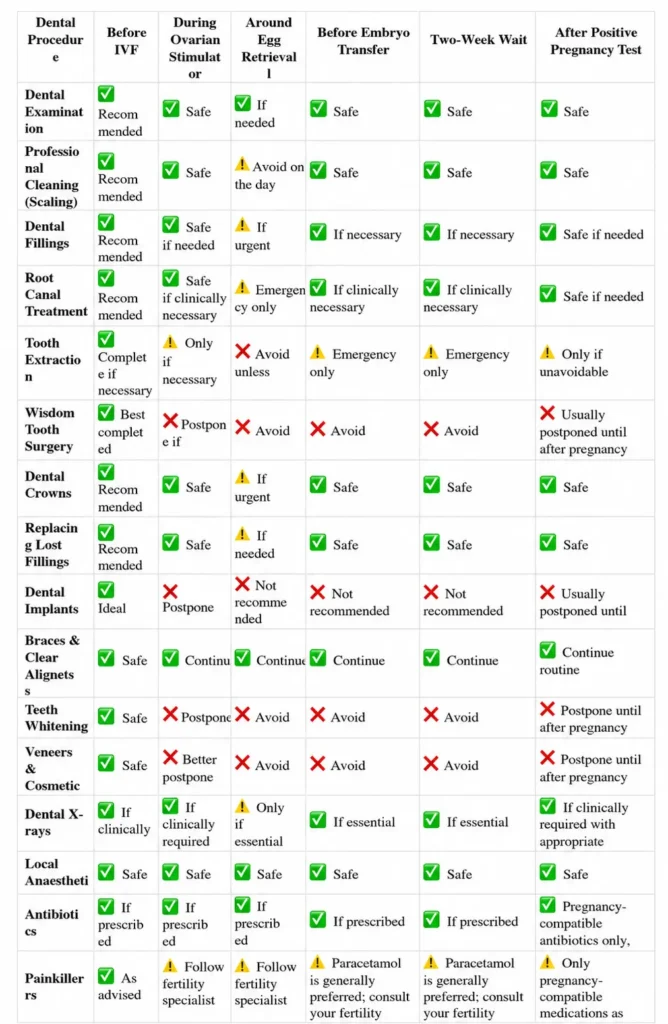
Legend
- ✅ Generally safe
- ⚠ Safe when clinically necessary or after discussion with your dentist and fertility
specialist - ❌ Usually best postponed unless it is a dental emergency
Dr. Arjita Sood
She is a leading Dental Surgeon and Implantologist practicing at Svaastha Dental Clinic & Implant Center in Gurgaon. With over 15 years of experience and clinical training from PGIMER Chandigarh, she specializes in modern 3D digital dentistry, dental implants, root canals, and aesthetic smile restorations.