Home / Blogs / Dental Health Before IVF: Why a Dental C...
← All Blogs
Dental Health Before IVF: Why a Dental Check-Up Matters
For couples undergoing IVF, every decision feels important. From choosing the right fertility clinic to following medication schedules and making lifestyle changes, there is a strong desire to do
everything possible to improve the chances of a successful pregnancy. One area that often surprises patients is dental health.
Many fertility specialists recommend a dental check-up before beginning IVF treatment. This advice isn’t because a small cavity or a routine filling is expected to affect fertility directly. Rather, it reflects a broader principle in medicine: entering pregnancy in the best possible overall health includes taking care of your oral health.
If you have been wondering whether it is safe to visit the dentist during IVF, whether a tooth infection could interfere with treatment, or whether dental procedures should be postponed, this guide will help answer those questions. We will walk through every stage of the IVF journey—from planning treatment to pregnancy—explaining what is generally considered safe, what should ideally be completed beforehand, and when your dentist and fertility specialist should work together to make treatment decisions.
Why Does Oral Health Matter During IVF?
Your mouth is not separate from the rest of your body. The gums, teeth, and surrounding tissues are connected to your overall health through blood vessels, the immune system, and the body’s inflammatory responses.
When the mouth is healthy, this connection goes largely unnoticed. However, untreated dental problems such as severe tooth decay, dental abscesses, or advanced gum disease can create chronic inflammation and bacterial infection that may affect general health.
This is one of the reasons healthcare professionals encourage people planning a pregnancy to address existing dental problems beforehand.
Understanding Inflammation
Inflammation is your body’s natural defence mechanism. Whenever tissues are injured or infected, your immune system responds by sending specialised cells and chemical messengers to the affected area. This process helps eliminate harmful bacteria and promotes healing.
Problems arise when inflammation becomes long-lasting. Chronic gum disease, untreated dental infections and persistent oral bacteria can keep the immune system activated for months or even years. Researchers have been investigating whether this ongoing inflammation may influence reproductive health, pregnancy and IVF outcomes.
It is important to understand that inflammation is not unique to the mouth. Conditions such as obesity, diabetes, smoking, chronic stress and autoimmune diseases can also contribute to inflammation throughout the body. Oral health is therefore one piece of the larger picture of overall health.
What Does Current Research Tell Us?
Research into oral health and fertility has grown significantly over the past two decades.
Several observational studies have found that women with moderate to severe gum disease may take longer to conceive compared with women who have healthy gums. Other studies have reported an association between periodontal disease and complications during pregnancy, including preterm birth, low birth weight and pre-eclampsia.
Scientists have also explored whether chronic inflammation caused by untreated gum disease could influence the environment required for successful implantation and early pregnancy.
However, it is equally important to understand what research has not proven.
Current scientific evidence does not show that tooth decay or gum disease directly causes infertility. Similarly, there is no conclusive evidence that treating gum disease alone increases IVF success rates or guarantees pregnancy.
Most available studies show an association, not cause and effect. This means that people with poor oral health may also share other factors—such as smoking, diabetes, obesity, nutritional deficiencies or limited access to healthcare—that independently affect fertility.
For this reason, reputable fertility specialists and dentists avoid making exaggerated claims. Instead, they recommend achieving good oral health because it reduces unnecessary infection, improves overall wellbeing and lowers the risk of dental emergencies during fertility treatment and pregnancy.
Why Fertility Specialists Recommend Dental Clearance?
Many fertility clinics advise patients to have a dental examination before starting IVF for several practical reasons.
Firstly, untreated dental infections rarely improve on their own. A cavity that causes only occasional sensitivity today can become a severe toothache or dental abscess during ovarian stimulation or immediately before embryo transfer, when patients are understandably reluctant to undergo unexpected treatment.
Secondly, IVF follows a carefully planned schedule. Emergency dental appointments, antibiotics or severe pain can add unnecessary physical and emotional stress during an already demanding process.
Finally, once pregnancy is confirmed, certain elective dental procedures are usually postponed until after delivery. Completing necessary treatment beforehand often makes the remainder of the pregnancy much more comfortable.
Rather than viewing a dental visit as another item on your IVF checklist, think of it as preventive healthcare—similar to optimising nutrition, controlling blood sugar or stopping smoking before pregnancy.
Common Dental Problems That Should Not Be Ignored
Many people delay dental treatment because they are not in pain. Unfortunately, several dental diseases progress silently before symptoms appear.
Tooth Decay
Small cavities can usually be repaired quickly with a simple filling. If left untreated, decay gradually spreads deeper into the tooth until it reaches the nerve, often resulting in severe pain and the need for root canal treatment or extraction.
Treating decay before IVF is far easier than managing an emergency toothache during treatment.
Gum Disease
Bleeding while brushing or flossing should never be considered normal.
Early gum disease, known as gingivitis, is usually reversible with professional cleaning and improved oral hygiene. If neglected, it may progress to periodontitis, a more advanced disease that damages the bone and tissues supporting the teeth.
Healthy gums contribute not only to a healthy smile but also to reducing chronic inflammation within the body.
Dental Abscess
A dental abscess is an active bacterial infection. It may cause severe pain, swelling, pus discharge or facial swelling, although some abscesses remain surprisingly painless until they become advanced.
Dental abscesses require prompt treatment and should never be ignored because IVF is about to begin.
Impacted Wisdom Teeth
Not every wisdom tooth needs to be removed. However, wisdom teeth that have caused repeated episodes of swelling, infection or difficulty cleaning should be assessed before fertility treatment begins.
Your dentist can advise whether monitoring or removal is the better option.
Broken Fillings, Crowns and Cracked Teeth
A cracked tooth or damaged filling may seem like a minor inconvenience until it suddenly becomes painful.
Replacing worn restorations before IVF helps minimise the chance of unexpected dental emergencies during treatment.
The Ideal Time for a Dental Check-up
The best time for a comprehensive dental examination is before ovarian stimulation medications begin.
This allows sufficient time to complete any necessary investigations or treatment without interfering with your fertility schedule.
A pre-IVF dental visit may include:
- A comprehensive oral examination
- Dental X-rays if clinically required
- Professional cleaning
- Assessment of gum health
- Evaluation of existing fillings, crowns and bridges
- Wisdom tooth assessment
- Investigation of tooth sensitivity or pain
- Advice on maintaining oral health throughout fertility treatment
If no significant problems are found, you can begin IVF knowing that your oral health is unlikely to create unexpected complications.
Building Healthy Habits Before IVF
Preparing for IVF is not only about treating existing dental disease. It is also an opportunity to develop habits that support both oral and general health.
Simple measures can make a significant difference:
- Brush your teeth twice daily with fluoride toothpaste.
- Clean between your teeth every day using floss or interdental brushes.
- Reduce frequent sugary snacks and acidic beverages.
- Drink enough water to help maintain healthy saliva production.
- Replace your toothbrush every three months or sooner if the bristles become worn.
- Schedule regular dental examinations, even if you have no pain.
These simple habits help lower the risk of developing new dental problems while you focus on your fertility treatment
Key Takeaways
Good oral health is an important part of preparing for IVF, but it should be viewed in perspective. Current scientific evidence supports treating active dental disease and maintaining healthy gums before pregnancy, while also recognising that oral health is only one of many factors influencing fertility outcomes.
A dental examination before IVF allows potential problems to be identified early, reduces the risk of unexpected dental emergencies during treatment, and helps ensure that you enter pregnancy in the best possible overall health.
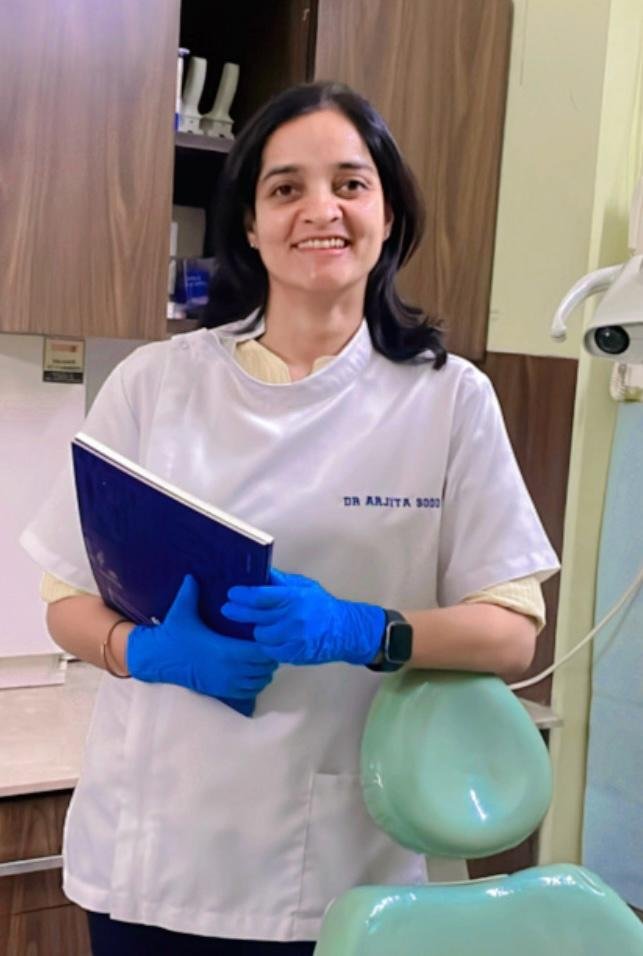
Dr. Arjita Sood
She is a leading Dental Surgeon and Implantologist practicing at Svaastha Dental Clinic & Implant Center in Gurgaon. With over 15 years of experience and clinical training from PGIMER Chandigarh, she specializes in modern 3D digital dentistry, dental implants, root canals, and aesthetic smile restorations.