Home / Blogs / Safe Dental Treatments During IVF: What ...
← All Blogs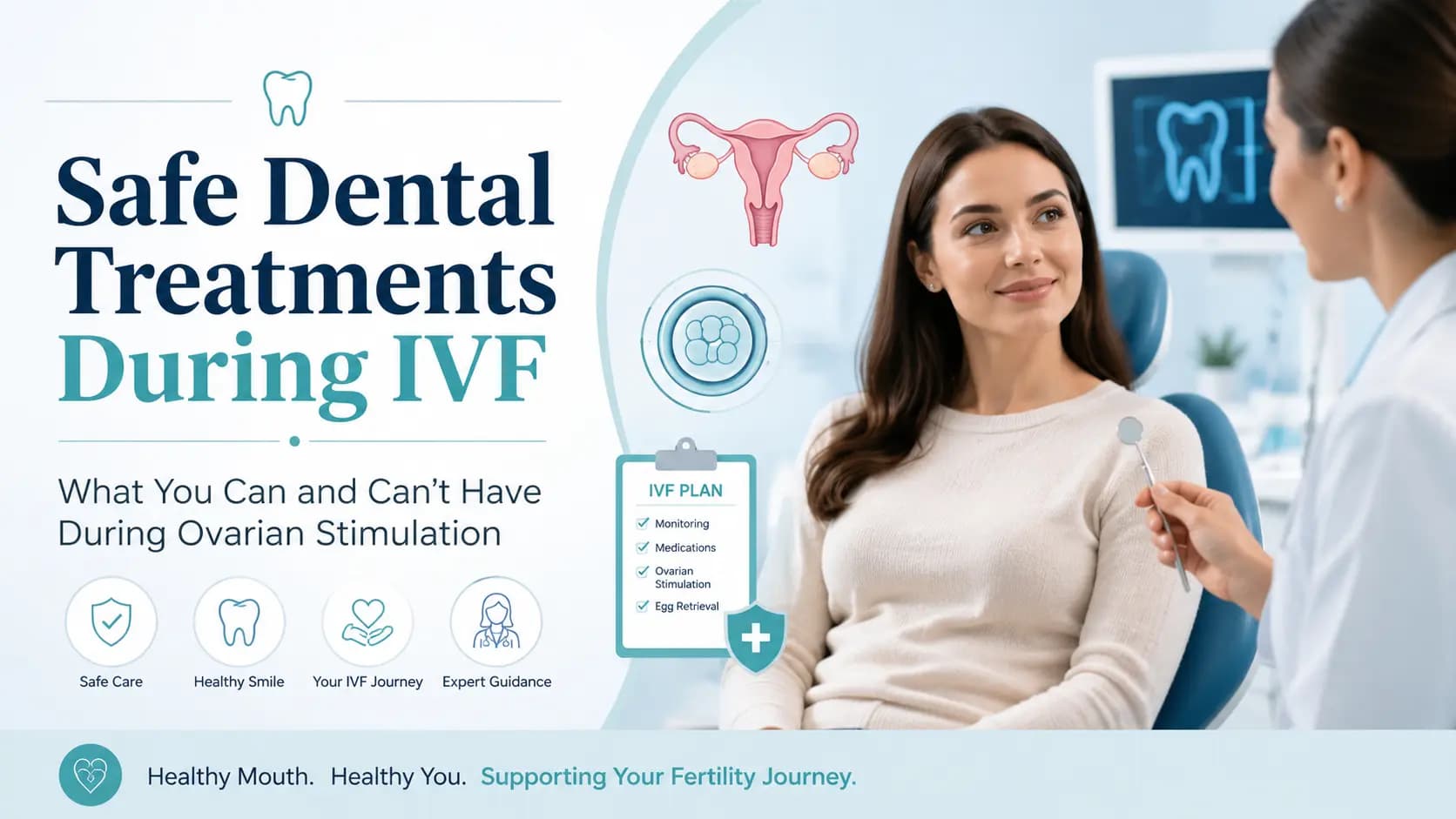
Safe Dental Treatments During IVF: What You Can and Can’t Have during ovarian stimulation
Once your IVF cycle begins, the focus shifts from preparation to treatment. Daily hormone injections, frequent blood tests, ultrasound scans, and the anticipation of egg retrieval can make this phase both exciting and overwhelming. During this time, many patients become anxious about even minor health issues, especially if they develop a toothache or need unexpected dental care.
One of the most common questions dentists hear is, “Can I have dental treatment while I’m undergoing IVF?”
The reassuring answer is that most necessary dental treatment can still be provided safely during IVF. The key lies in understanding which procedures are urgent, which can be postponed, and ensuring that your dentist and fertility specialist communicate whenever treatment is required.
How Ovarian Stimulation May Affect Your Oral Health
During ovarian stimulation, fertility medications encourage multiple eggs to mature instead of the single egg released in a natural cycle. This causes significant changes in hormone levels, particularly estrogen and progesterone.
These hormones don’t just affect your reproductive system—they also influence the tissues in your mouth.
Some women notice no changes at all, while others experience symptoms such as:
- Bleeding gums while brushing or flossing
- Swollen or tender gums
- Increased sensitivity to spicy or acidic foods
- Dry mouth
- A metallic or unusual taste
- Mild tooth sensitivity
- Mouth ulcers
- Increased plaque accumulation despite good oral hygiene
These symptoms are usually temporary and improve once hormone levels return to normal. However, they highlight the importance of maintaining excellent oral hygiene throughout your IVF cycle.
Why Do Hormones Affect the Gums?
Your gums contain receptors that respond to estrogen and progesterone. As hormone levels rise, blood flow to the gum tissues increases, making them more sensitive and more likely to react to the plaque that naturally forms on your teeth.
This means that even if you brush exactly as you always have, your gums may appear redder, feel swollen, or bleed more easily than usual.
It is important to understand that hormones themselves do not cause gum disease. Rather, they amplify your body’s response to dental plaque. If plaque is well controlled with good brushing and flossing, these hormonal changes are usually mild.
Is It Safe to Visit the Dentist During Ovarian Stimulation?
Yes.
Many patients assume they should avoid the dentist completely once IVF medications begin. In reality, routine dental examinations are considered safe, and delaying assessment of a painful tooth may create a much bigger problem later.
If you experience dental pain, swelling, or a broken tooth during ovarian stimulation, contact your dentist promptly. Early evaluation often allows simpler treatment before the problem worsens.
Always inform your dentist that you are currently undergoing IVF, and let your fertility specialist know if any dental procedure has been recommended.
Can You Have a Professional Dental Cleaning?
In most cases, yes.
Professional cleaning removes plaque and tartar that cannot be removed with brushing alone. This helps reduce gum inflammation and bleeding, especially if hormones have made your gums more sensitive.
Many patients worry that cleaning may cause bacteria to enter the bloodstream. While brief bacteremia can occur even during everyday activities such as brushing or chewing, there is no evidence that routine professional cleaning negatively affects IVF treatment.
If you have significant gum disease, your dentist may recommend treatment before embryo transfer whenever possible.
Can You Get a Filling During IVF?
Yes.
If a cavity is causing discomfort or is likely to worsen during your treatment cycle, placing a filling is generally considered appropriate.
A simple filling is a conservative procedure that removes decay and restores the tooth before the problem progresses.
If the cavity is very small and completely symptom-free, your dentist may decide that it can safely wait until after embryo transfer or pregnancy, depending on your treatment schedule.
The decision is based on balancing the benefits of early treatment against the urgency of the dental problem.
Is Root Canal Treatment Safe?
This is one of the biggest concerns for patients undergoing IVF.
Many people believe that root canal treatment itself is risky during fertility treatment. In reality, the infection inside the tooth is usually the greater concern.
When the nerve of a tooth becomes infected, bacteria multiply inside the root canal system. Without treatment, the infection can spread into the surrounding bone and eventually form an abscess.
If your dentist recommends root canal treatment because of an active infection or severe pain, delaying treatment may actually expose you to more discomfort and potentially more medication later.
When clinically necessary, root canal treatment can usually be carried out safely using local anaesthesia.
The aim is to eliminate infection, relieve pain, and preserve your natural tooth.
What About Tooth Extractions?
Whenever possible, planned extractions should be completed before starting IVF.
However, life does not always follow a timetable.
If a tooth is severely damaged, cannot be restored, or has developed an abscess, extraction may still be the most appropriate treatment.
The decision depends on several factors, including:
- The severity of pain or infection
- Whether facial swelling is present
- The stage of your IVF cycle
- Your overall medical condition
- Advice from both your dentist and fertility specialist
Leaving a severely infected tooth untreated simply because you are undergoing IVF is rarely the safest option.
Are Dental X-rays Safe During IVF?
Dental X-rays are another common source of anxiety.
Modern digital dental X-rays use very low doses of radiation. The amount of radiation from a single dental X-ray is extremely small compared with many other medical imaging procedures and is also far lower than the radiation we receive naturally from the environment over time.
If an X-ray is essential for diagnosing a painful tooth or planning emergency treatment, your dentist should not hesitate to prescribe one simply because you are undergoing IVF.
However, if the X-ray is purely elective and can safely be postponed, many dentists prefer to wait until after your fertility treatment.
The guiding principle is simple: only perform X-rays when the expected benefit outweighs any unnecessary exposure.
Is Local Anaesthesia Safe?
Yes.
Local anaesthesia numbs the area being treated so that dental procedures can be carried out comfortably.
The amount of anaesthetic used in dentistry acts primarily around the tooth and has minimal effects on the rest of the body.
Untreated dental pain causes stress, disturbed sleep, and inflammation—all of which may be more harmful than receiving appropriate local anaesthesia for necessary dental care.
If you require treatment, your dentist will select an appropriate anaesthetic and review your medical history before proceeding.
Can You Take Antibiotics During IVF?
Not every toothache requires antibiotics.
In fact, many dental infections are best treated by removing the source of infection through a filling, root canal treatment, or extraction rather than relying solely on medication.
If antibiotics are genuinely needed, your dentist will prescribe one that is considered appropriate for your condition while taking your fertility treatment into account.
Never take leftover antibiotics from a previous illness or stop a prescribed course early without consulting your healthcare provider.
Which Painkillers Are Usually Recommended?
Pain management should always be individualised.
Paracetamol (acetaminophen) is generally considered the preferred first-line pain reliever for many dental conditions.
Some fertility specialists recommend avoiding certain non-steroidal anti-inflammatory drugs (NSAIDs), such as ibuprofen, around ovulation, egg retrieval, or embryo transfer because they may theoretically interfere with ovulation or implantation in certain situations.
Since IVF protocols differ between clinics, always follow the advice given by your fertility specialist before taking any medication.
Dental Emergencies Should Never Be Ignored
One of the biggest mistakes patients make is trying to “wait until IVF is over” before seeking dental care.
You should contact your dentist promptly if you experience:
- Severe toothache that keeps you awake
- Facial swelling
- Pus or discharge around a tooth
- Fever associated with dental pain
- A broken tooth following trauma
- Difficulty swallowing or opening your mouth
- Persistent bleeding after dental trauma
Prompt treatment of an emergency dental infection is usually much safer than allowing the condition to worsen.
Planning Around Egg Retrieval
Egg retrieval is a short surgical procedure, often performed under sedation.
If possible, avoid scheduling elective dental procedures immediately before or immediately after egg retrieval. This allows your body to recover from the fertility procedure without additional stress.
If you develop a dental emergency around the time of egg retrieval, your dentist and fertility specialist should work together to determine the safest timing for treatment.
Looking After Your Mouth During IVF
Maintaining good oral hygiene becomes even more important during ovarian stimulation.
To keep your mouth healthy:
- Brush twice daily using a soft-bristled toothbrush and fluoride toothpaste.
- Floss or clean between your teeth every day.
- Drink plenty of water to reduce dry mouth.
- Limit sugary snacks and drinks between meals.
- Contact your dentist early if you notice swelling, bleeding, or persistent pain. Small problems are much easier to treat than large ones.
Key Takeaways
Starting IVF does not mean you should avoid the dentist altogether. Most routine and emergency dental care can still be provided safely when clinically necessary.
Hormonal changes may temporarily increase gum sensitivity and bleeding, but maintaining excellent oral hygiene usually keeps these symptoms under control. If you develop a dental infection or severe pain, prompt treatment is generally safer than delaying care. The most important step is ensuring that your dentist and fertility specialist are aware of your treatment so they can coordinate your care when necessary.
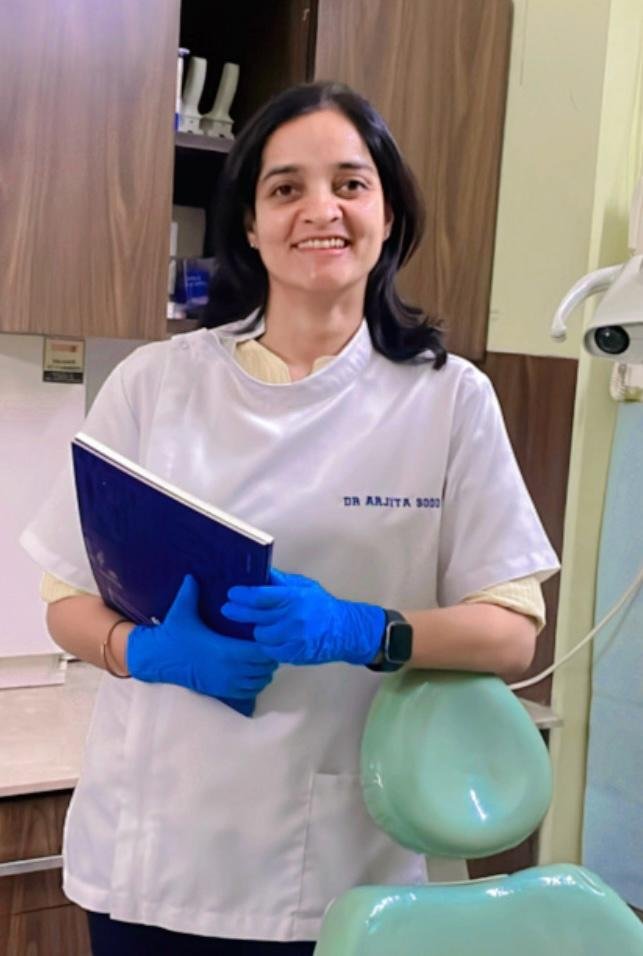
Dr. Arjita Sood
She is a leading Dental Surgeon and Implantologist practicing at Svaastha Dental Clinic & Implant Center in Gurgaon. With over 15 years of experience and clinical training from PGIMER Chandigarh, she specializes in modern 3D digital dentistry, dental implants, root canals, and aesthetic smile restorations.