Home / Blogs / The Silent Threat of Everyday Gadgets: W...
← All Blogs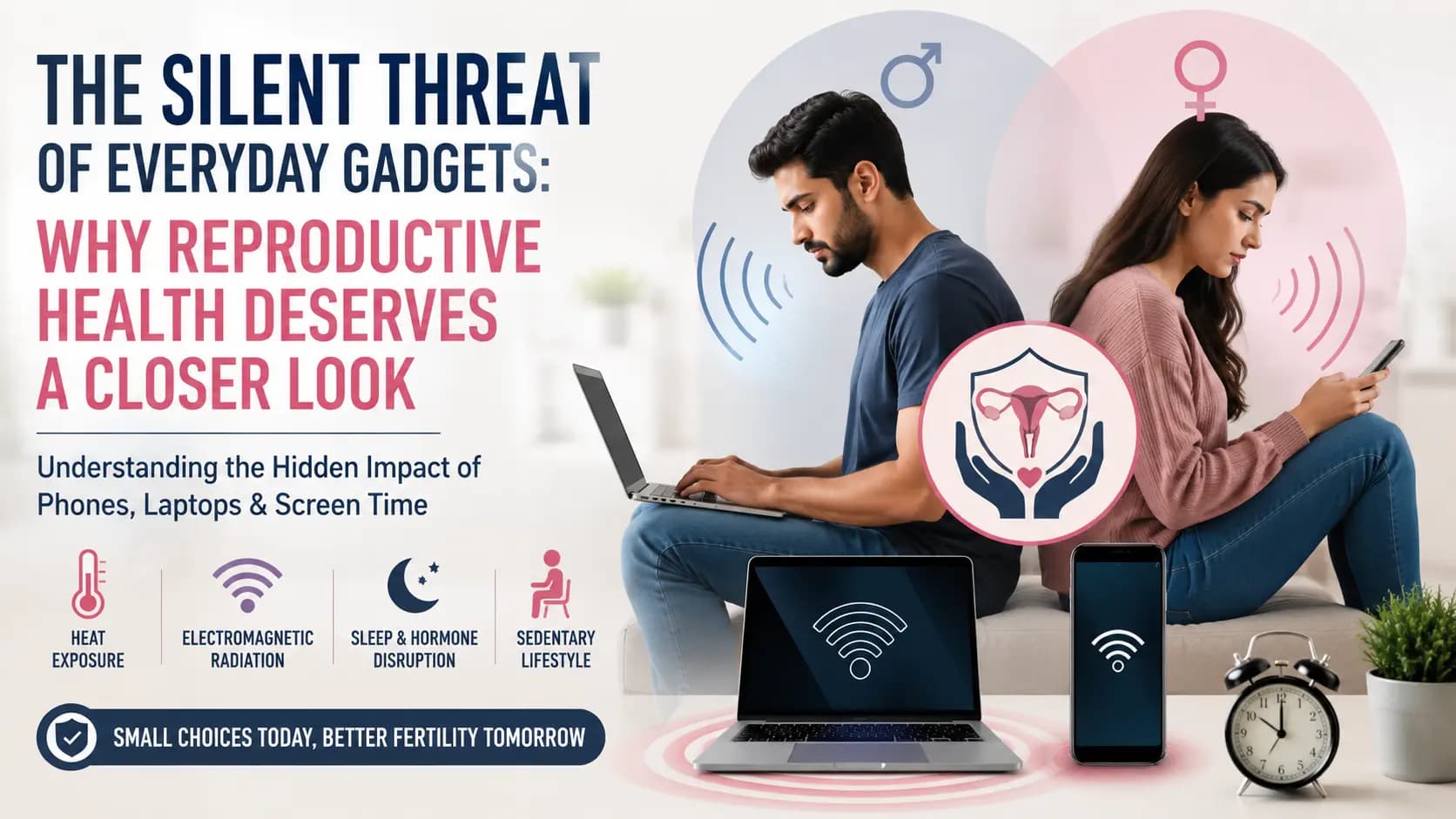
The Silent Threat of Everyday Gadgets: Why Reproductive Health Deserves a Closer Look
In fertility care, we often focus on hormones, genetics, egg quality, sperm parameters, and uterine receptivity. Yet an increasingly important — and frequently overlooked — factor is woven into the fabric of modern life: the constant, intimate presence of digital gadgets. Phones, laptops, tablets, and wearables have become extensions of our bodies, but their biological impact is far more complex than most people realise.
From an IVF and reproductive‑science perspective, the concern is not merely about screen time or digital addiction. It is about thermal exposure, electromagnetic radiation, circadian disruption, and metabolic effects — all of which influence reproductive physiology in measurable ways.
For men, the testes are uniquely sensitive to temperature. Sperm production requires an environment slightly cooler than core body temperature. When laptops rest on the lap for prolonged periods or mobile phones remain in trouser pockets, scrotal temperature rises. Even a sustained increase of 1–2°C can impair spermatogenesis, reduce motility, and increase DNA fragmentation — parameters that directly affect embryo development and IVF success. Emerging evidence also suggests that electromagnetic waves may influence oxidative stress pathways, further compromising sperm integrity.
Women experience a different but equally significant set of effects. Blue light emitted from screens suppresses melatonin, a hormone essential for sleep regulation and reproductive hormone balance. Melatonin also plays a protective role in oocyte quality, acting as an antioxidant within the follicular environment. Chronic circadian disruption — late‑night scrolling, irregular sleep cycles, and prolonged screen exposure — can alter ovulatory patterns, luteal phase stability, and overall endocrine harmony. Additionally, keeping heated devices close to the abdomen may expose pelvic organs to unnecessary thermal and electromagnetic influence, subtly affecting uterine and ovarian function.
Beyond direct physiological effects, gadget overuse shapes lifestyle behaviours that indirectly impact fertility: reduced physical activity, increased stress, altered metabolic rhythms, and prolonged sedentary posture. Each of these factors contributes to inflammation, hormonal imbalance, and diminished reproductive resilience — all highly relevant in IVF outcomes.
As fertility professionals, we emphasise evidence‑based medicine, advanced diagnostics, and personalised treatment plans. But awareness of environmental and lifestyle influences is equally vital. Technology is not the enemy; uninformed use is. Small, intentional changes — keeping devices away from reproductive areas, prioritising sleep hygiene, reducing nighttime screen exposure, and incorporating movement into daily routines — can meaningfully support reproductive health.
In an era where digital convenience often overshadows biological caution, it is time to recognise that our gadgets may be silently shaping our fertility. Understanding these effects empowers individuals to protect their reproductive future with knowledge, mindfulness, and science‑aligned choices.