Home / Blogs / Indications for Surgical Sperm Retrieval...
← All Blogs
Indications for Surgical Sperm Retrieval
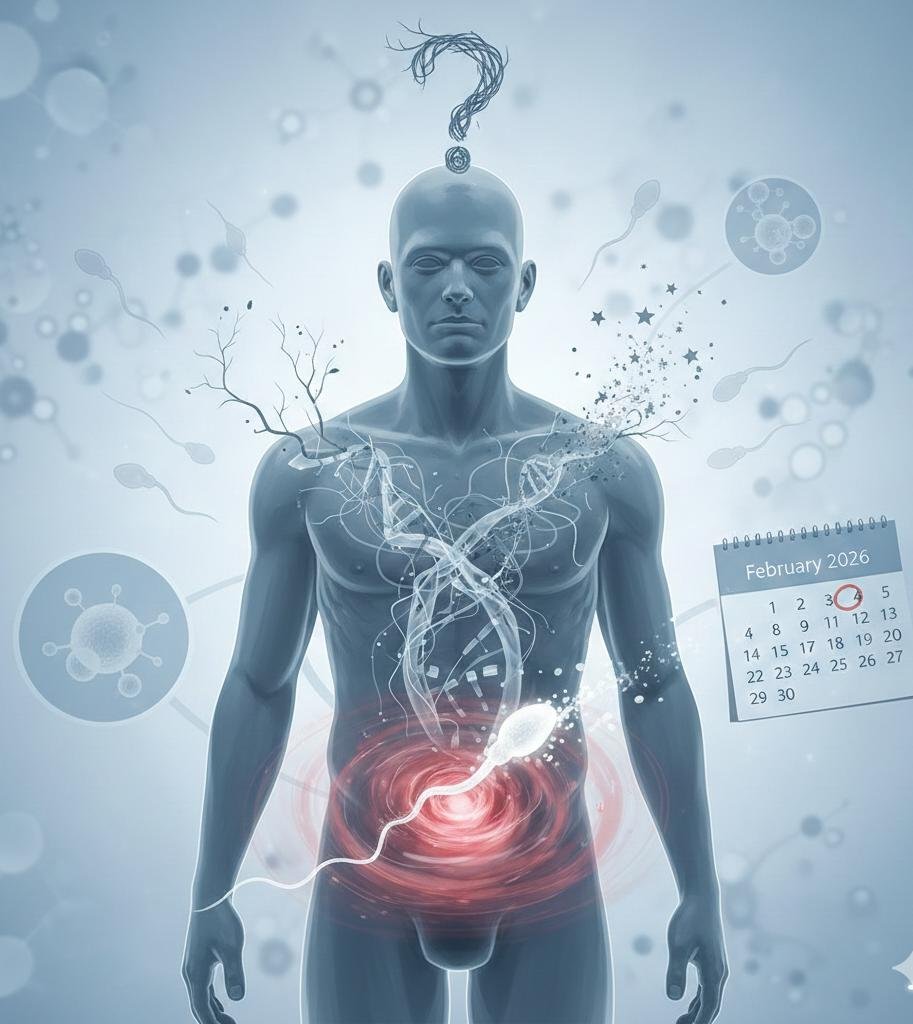
Male infertility is a significant contributor to couple infertility worldwide
• Azoospermia affects approximately 1% of men and 10–15% of infertile males
• Surgical sperm retrieval provides access to sperm when ejaculation fails to do so
• The introduction of ICSI has expanded the indications for SSR
• SSR plays a critical role in modern assisted reproductive technology
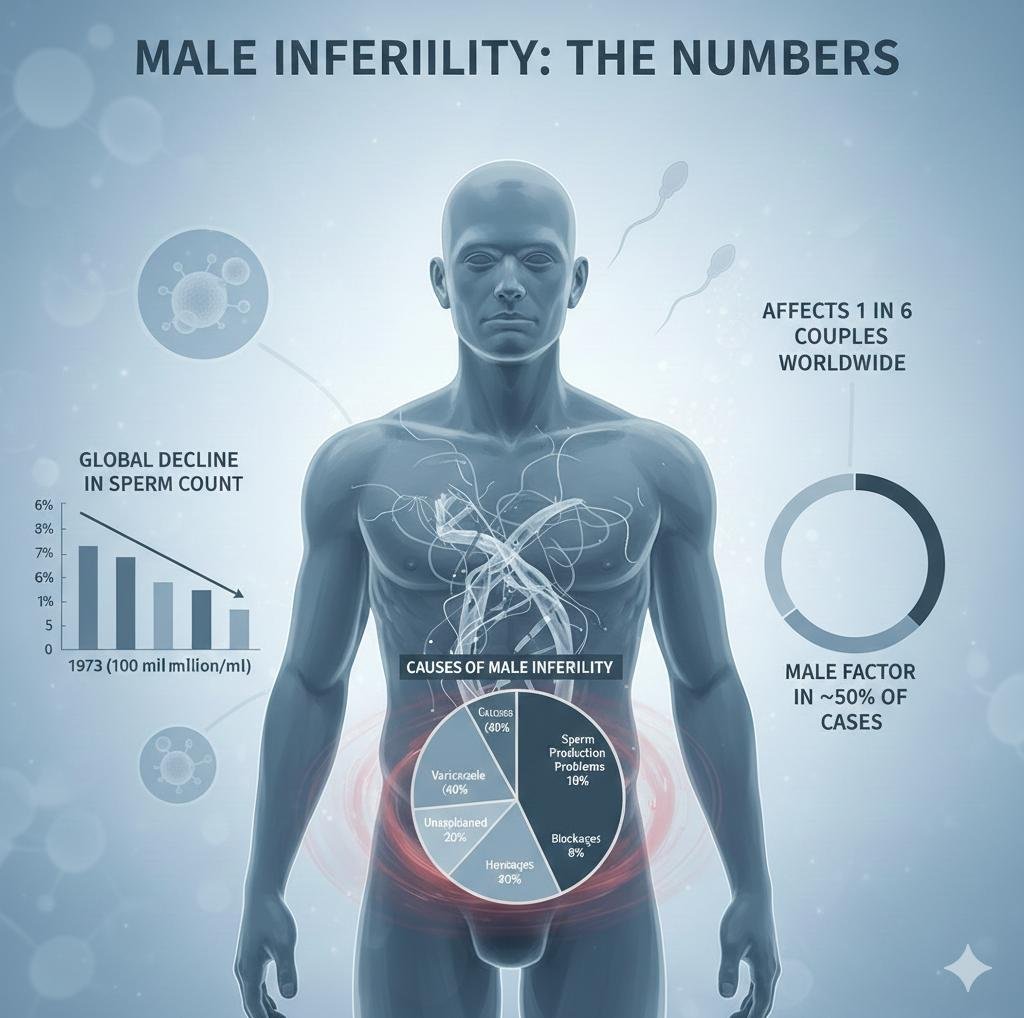
Azoospermia affects approximately 1% of the general male population
• Present in 10–15% of infertile men
• Major cause of severe male factor infertility
• Historically considered untreatable before the advent of ICSI
• Surgical sperm retrieval has significantly improved reproductive outcomes in these patients
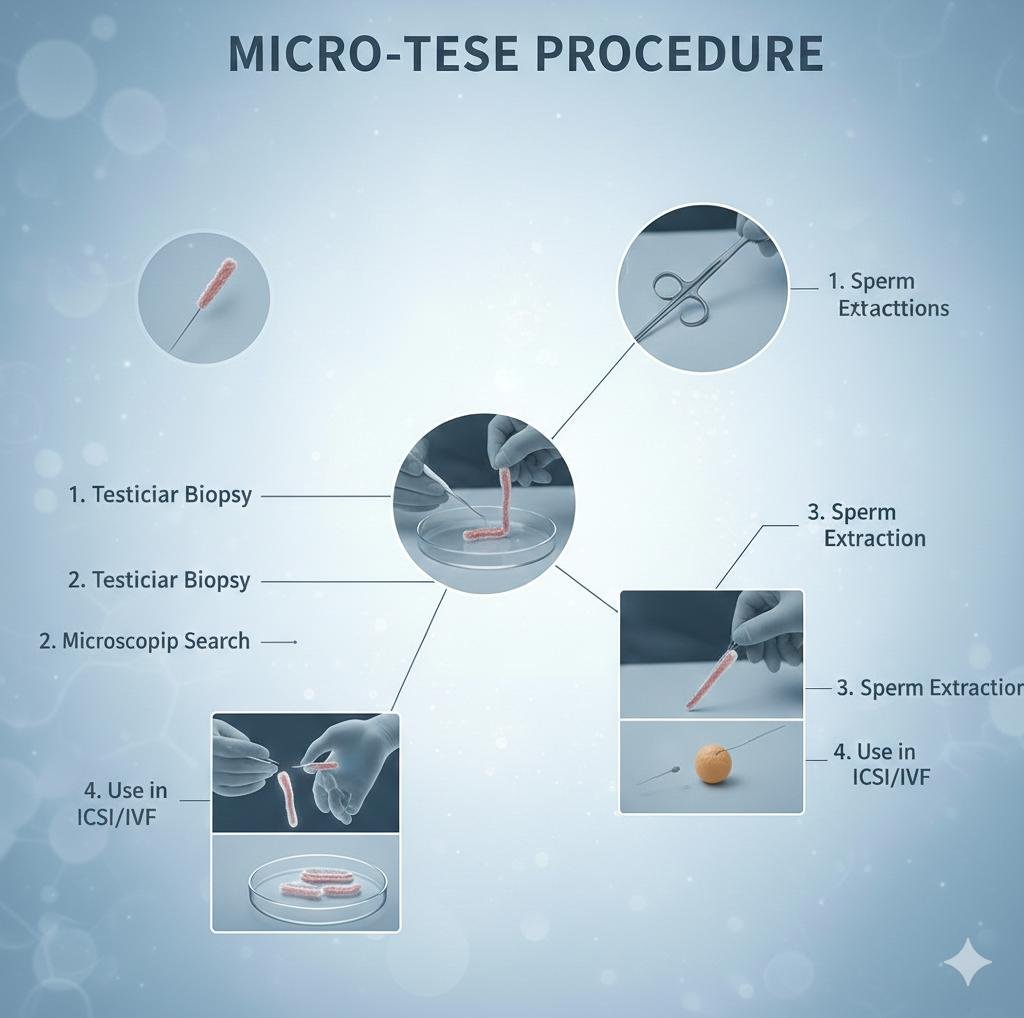
What is Surgical Sperm Retrieval (SSR)?
• Surgical Sperm Retrieval (SSR) refers to techniques used to obtain sperm directly from the epididymis or testis
• Performed when no sperm are present or usable in the ejaculate
• Retrieved sperm are primarily used for Intracytoplasmic Sperm Injection (ICSI)
• Can be performed as:
• Percutaneous procedures
• Open surgical procedures
Common SSR Techniques:
• PESA – Percutaneous Epididymal Sperm Aspiration
• MESA – Microsurgical Epididymal Sperm Aspiration
• TESA – Testicular Sperm Aspiration
• TESE – Testicular Sperm Extraction
• micro-TESE – Microsurgical Testicular Sperm Extraction

Why is Surgical Sperm Retrieval Needed?
• Failure of sperm to appear in ejaculate due to obstruction
• Impaired or absent sperm production due to testicular dysfunction
• Inability to ejaculate sperm despite production
• Congenital or acquired abnormalities of the male reproductive tract
• Need for higher-quality sperm for use in assisted reproduction
Pre-SSR Evaluation
Clinical history
- Duration of infertility
- History of cryptorchidism, infections, trauma or surgery
- Exposure to chemotherapy, radiation, or gonadotoxins
Semen analysis
- Minimum of two samples confirming azoospermia
- Centrifuged semen examination to rule out cryptozoospermia
Hormonal profile
- Serum FSH, LH, Testosterone and Prolactin
- Helps differentiate obstructive vs non-obstructive causes
Imaging
- Scrotal ultrasound to assess testicular volume and epididymis
- Transrectal ultrasound (TRUS) in suspected obstruction
Genetic evaluation
- Karyotype analysis
- Y-chromosome microdeletions
- CFTR mutation testing (in CBAVD)
Testicular biopsy (selected cases)
- When diagnosis remains uncertain
- Helps guide choice of SSR technique
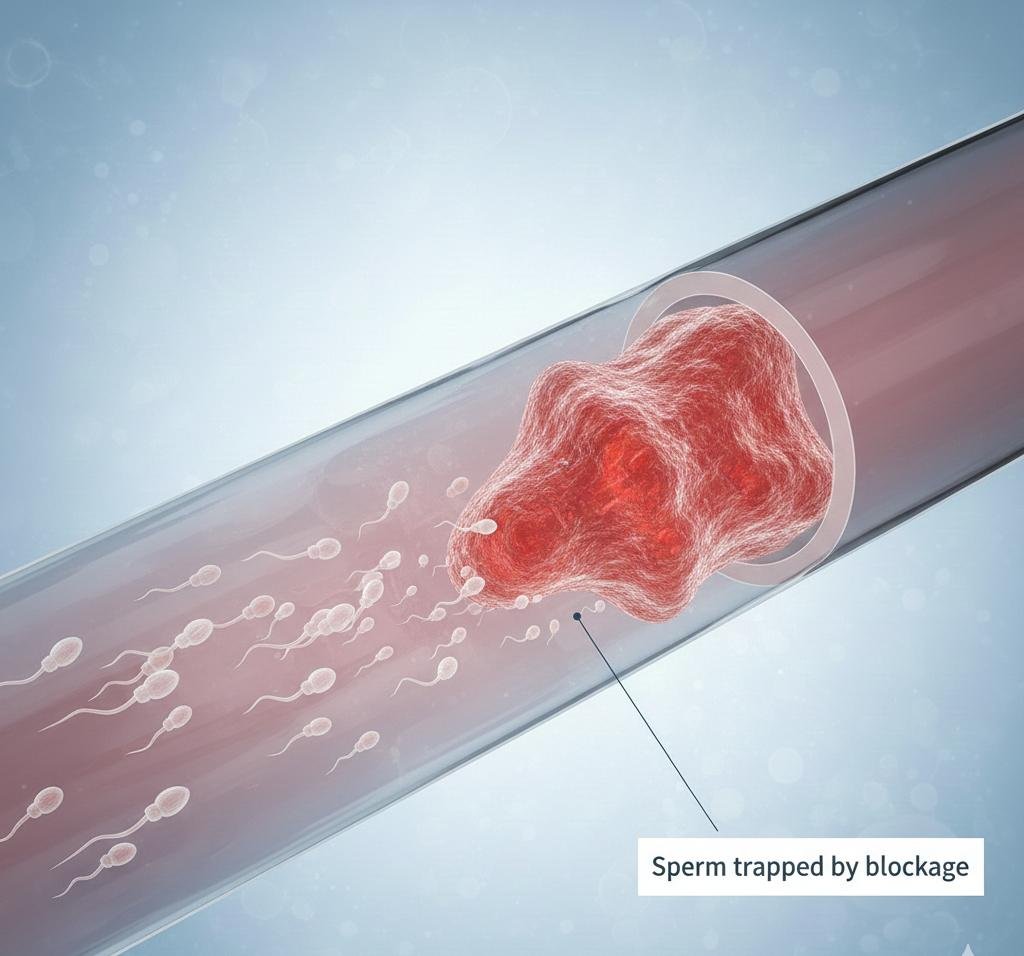
Classification of Azoospermia
Azoospermia is classified based on whether sperm production is normal or impaired and whether an obstruction is present in the reproductive tract.
1. Obstructive Azoospermia (OA)
Definition:
Normal spermatogenesis with blockage in the sperm outflow tract.
Common causes:
•Vasectomy
•Congenital bilateral absence of vas deferens (CBAVD)
•Epididymal obstruction
•Ejaculatory duct obstruction
•Post-infectious or post-surgical scarring
Clinical features:
•Normal testicular size and consistency
•Normal serum FSH and testosterone
•Normal secondary sexual characteristics
Implications:
•High likelihood of successful sperm retrieval
•Epididymal or testicular sperm can be used for ICSI
•Genetic evaluation important (e.g., CFTR mutations in CBAVD)
2. Non-Obstructive Azoospermia (NOA)
Definition:
Failure or severe impairment of spermatogenesis within
the testes.
Common causes:
- Sertoli cell-only syndrome
- Maturation arrest
- Hypospermatogenesis
- Klinefelter syndrome
- Y-chromosome microdeletions
- Testicular damage due to chemotherapy, radiation, or
toxins
Clinical features:
- Small or soft testes
- Elevated serum FSH
- May have hormonal imbalance
Implications:
- Sperm production may be focal and sparse
- Sperm retrieval rates are lower than OA
- Best managed with microsurgical techniques (micro
TESE)
| Feature | Obstructive Azoospermia (OA) | Non-Obstructive Azoospermia (NOA) |
| Primary problem | Blockage in sperm transport | Defective sperm production |
| Spermatogenesis | Normal | Impaired or absent |
| Testicular size | Normal | Small or soft |
| Serum FSH | Normal | Elevated |
| Semen volume | Usually normal | Normal or reduced |
| Fructose in semen | Present | Present |
| Genetic association | CFTR mutations (CBAVD) | Klinefelter, Y-microdeletions |
| Histology | Normal seminiferous tubules | SCO, maturation arrest, hypospermatogenesis |
| SSR success rate | Very high (>90%) | Moderate (30–50%) |
| Preferred technique | PESA / MESA / TESA | micro-TESE |
| Need for ICSI | Yes | Yes |
| Prognosis | Excellent | Variable |
Indication 1: Obstructive Azoospermia (OA)
Definition:
Presence of normal spermatogenesis with blockage in the
sperm transport pathway preventing sperm from appearing
in the ejaculate.
Common Causes
•Vasectomy
•Congenital bilateral absence of vas deferens (CBAVD)
•Epididymal obstruction
•Ejaculatory duct obstruction
•Post-infectious scarring (e.g., TB, STDs)
•Post-surgical injury
Clinical Features
•Normal testicular size and consistency
•Normal serum FSH and testosterone
•Normal secondary sexual characteristics
•Often normal semen volume (except ejaculatory duct
obstruction)
Rationale for SSR in OA
•Sperm production is normal
•Obstruction prevents natural ejaculation
•SSR bypasses the obstruction and retrieves viable
sperm
•Retrieved sperm are suitable for ICSI
Expected Outcomes
•High sperm retrieval rate (>90%)
•Good fertilization and pregnancy outcomes
with ICSI
•Prognosis is excellent compared to NOA
Preferred Techniques
•PESA (Percutaneous Epididymal Sperm
Aspiration)
•MESA (Microsurgical Epididymal Sperm
Aspiration)
•TESA / TESE (if epididymal retrieval fails)
Indication 2: Non-Obstructive Azoospermia (NOA)
Definition:
Absence of sperm in ejaculate due to impaired or absent
spermatogenesis within the testes.
Common Causes
•Sertoli cell-only syndrome
•Maturation arrest
•Hypo-spermatogenesis
•Klinefelter syndrome
•Y-chromosome microdeletions
•Testicular damage due to chemotherapy, radiation, or toxins
•Severe varicocele (selected cases)
Clinical Features
•Reduced or soft testicular volume
•Elevated serum FSH
•Possible hormonal imbalance
•May have associated genetic abnormalities
Rationale for SSR in NOA
•Spermatogenesis may be focal and patchy
•Small areas of active sperm production can exist
•SSR aims to locate and retrieve sperm from these foci
•Enables biological parenthood in selected cases
Expected Outcomes
•Sperm retrieval rate: 30–50% (variable)
•Fertilization possible with ICSI
•Prognosis depends on histology and etiology
Preferred Technique
•Microsurgical Testicular Sperm Extraction
(micro-TESE)
→ higher retrieval rates
→ minimal tissue loss
→ better identification of active tubules
Why micro-TESE is Preferred in NOA Rationale:
•In NOA, spermatogenesis is often focal and sparse
•Conventional TESE may miss small areas of active sperm production
Advantages of micro-TESE
•Performed under an operating microscope
•Allows identification of dilated, opaque seminiferous tubules
•Targets areas more likely to contain sperm
•Avoids random and excessive tissue removal
Clinical Benefits
•Higher sperm retrieval rate compared to conventional TESE
•Reduced testicular tissue damage
•Lower risk of postoperative complications
•Better preservation of testicular function
Indications for micro-TESE
•Non-obstructive azoospermia
•Previous failed TESE
•Genetic causes with residual spermatogenesis
•Severe testicular atrophy
Indication 3: Severe Oligozoospermia
Definition:
Presence of extremely low sperm concentration in
ejaculate, often with poor motility and morphology.
Clinical Situations
•Sperm count < 1 million/mL
•Repeated semen samples showing very few or no
motile sperm
•High sperm DNA fragmentation in ejaculated sperm
•Poor fertilization or embryo development in previous
ART cycles
Rationale for SSR
Testicular sperm may have:
- Lower DNA fragmentation
- Reduced oxidative damage
- Better chromatin integrity
- Provides more reliable sperm source for ICSI
Expected Outcomes
•Improved fertilization rates in selected cases
•May improve embryo quality
•Useful when ejaculated sperm repeatedly fails
Preferred Techniques
•TESA
•TESE
Indication 4: Ejaculatory Failure
Definition:
Inability to ejaculate sperm into the semen despite
normal sperm production.
Common Causes
•Spinal cord injury
•Diabetes-related autonomic neuropathy
•Retrograde ejaculation
•Post-surgical nerve damage (pelvic or prostate
surgery)
•Psychogenic anejaculation
Clinical Scenarios
•Absence of sperm in ejaculate
•Sperm detected in post-ejaculatory urine
(retrograde ejaculation)
•Failure of medical or electroejaculation methods
Rationale for SSR
•Sperm production may be normal
•Mechanical failure of ejaculation
prevents sperm delivery
•SSR provides direct access to viable
sperm
Preferred Techniques
•TESA
•TESE
(when non-surgical sperm recovery fails)
Indication 5: Genetic Conditions
Definition:
SSR is indicated in selected genetic disorders where
spermatogenesis is reduced but not completely absent.
Common Genetic Conditions
•Y-chromosome microdeletion
Especially AZFc deletion (may still have residual
spermatogenesis)
•Klinefelter syndrome (47,XXY)
Mosaic or non-mosaic forms
•Congenital bilateral absence of vas deferens (CBAVD)
Commonly associated with CFTR gene mutations
Clinical Importance
•These patients often present with azoospermia
•Spermatogenesis may be:
- Severely reduced
- Patchy or focal
- SSR allows retrieval of sperm from limited areas of production
Rationale for SSR
•Enables use of patient’s own genetic material
•Avoids donor sperm in suitable cases
•Provides opportunity for biological parenthood
Special Considerations
•Mandatory genetic counseling
•Partner screening (especially in CFTR
mutations)
•Risk of transmitting genetic abnormalities
to offspring
•Preimplantation genetic testing (PGT)
may be advised
Indication 6: Failed ART with Ejaculated Sperm
Definition:
Use of SSR in couples with repeated failure of assisted
reproductive techniques despite adequate semen
parameters.
Clinical Scenarios
•Recurrent fertilization failure in IVF/ICSI
•Poor embryo development or arrest
•High sperm DNA fragmentation in ejaculated sperm
•Repeated implantation failure with male factor contribution
Rationale for SSR
•Testicular sperm may have:
- Lower DNA fragmentation
- Reduced oxidative stress
- Better chromatin integrity
- Avoids damage acquired during epididymal transit
- May improve fertilization and embryo quality
When to Consider
•After ≥2 failed ART cycles
•When high DNA fragmentation index (DFI) is
documented
•When no female factor explains repeated
failure
Preferred Techniques
•TESA
•TESE
(depending on availability of ejaculated
sperm and testicular status)
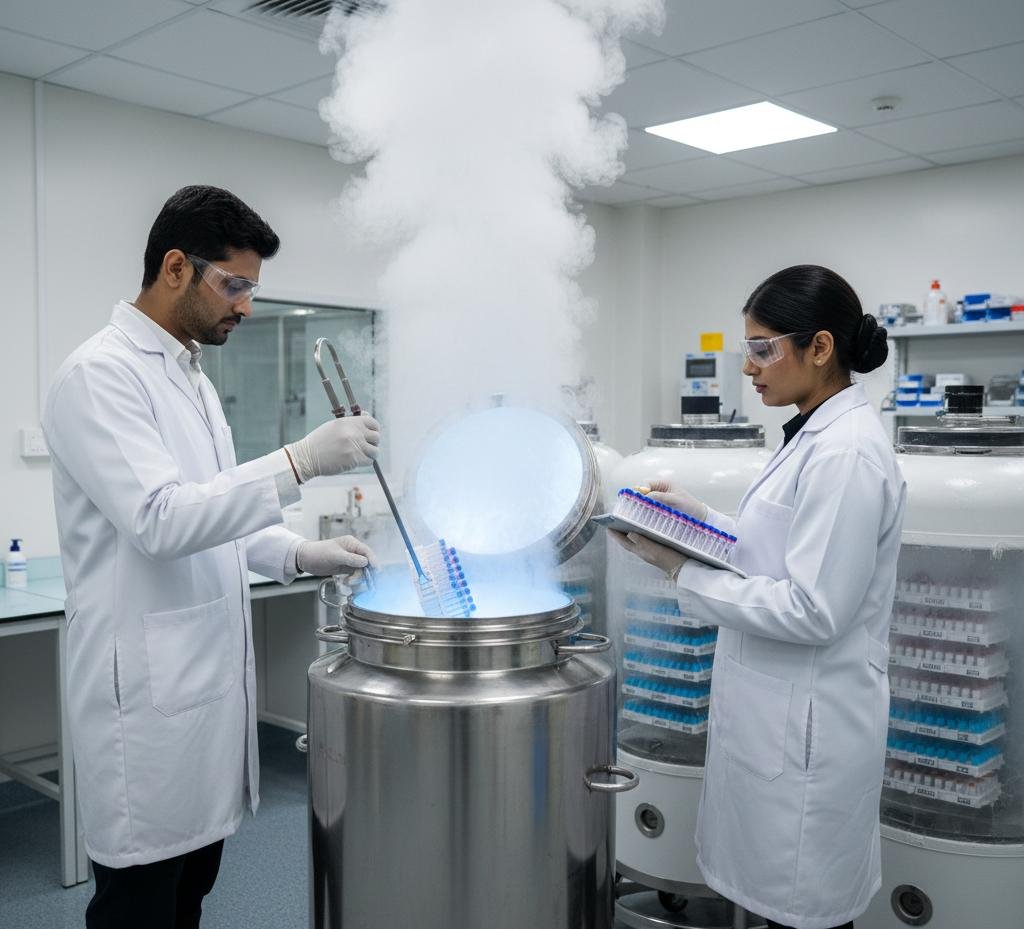
Cryopreservation After SSR
Definition:
Freezing and storage of surgically retrieved sperm
for future use in assisted reproduction.
Why Cryopreserve SSR Sperm?
•Avoids the need for repeat surgical procedures
•Allows use in multiple ICSI cycles
•Provides backup in case fresh cycle fails
•Especially important in NOA patients where
retrieval may be difficult
Clinical Advantages
•Enables scheduling flexibility between male and
female procedures
•Reduces patient discomfort and surgical risk
•Allows time for genetic testing or counseling
•Cost-effective in long-term management
Technique Selection Based on Indication
The choice of surgical sperm retrieval
technique depends on the underlying cause
of azoospermia and prior clinical findings.
| Clinical Condition | Preferred SSR Technique |
| Obstructive azoospermia (OA) | PESA / MESA |
| Failed epididymal retrieval | TESA / TESE |
| Non-obstructive azoospermia (NOA) | micro-TESE |
| Ejaculatory failure | TESA / TESE |
| Severe oligozoospermia | TESA / TESE |
| Genetic conditions (selected cases) | micro-TESE |
| Previous failed TESE | micro-TESE |
Key Take-Home Messages
- Surgical sperm retrieval (SSR) is a key
intervention in the management of severe male
factor infertility - Azoospermia must be correctly classified into
obstructive and non-obstructive types before
planning SSR - Proper patient selection and preoperative
evaluation are critical for success - Choice of technique should be indication-based
- SSR combined with ICSI enables biological
parenthood in many previously untreatable cases - Genetic counseling is essential in selected
patients


Dr. Rutvij Dalal
He is an award-winning IVF specialist and the founder of Janini IVF in Paschim Vihar, New Delhi. Holding an official super-specialty FNB in Reproductive Medicine and fellowship training from the University of Oxford (UK), he brings over 19 years and 10,000+ IVF cycles of clinical expertise, specializing in male infertility, recurrent IVF failures, and advanced reproductive technology.