Home / Blogs / PICSI in IVF: A Complete Guide to Succes...
← All Blogs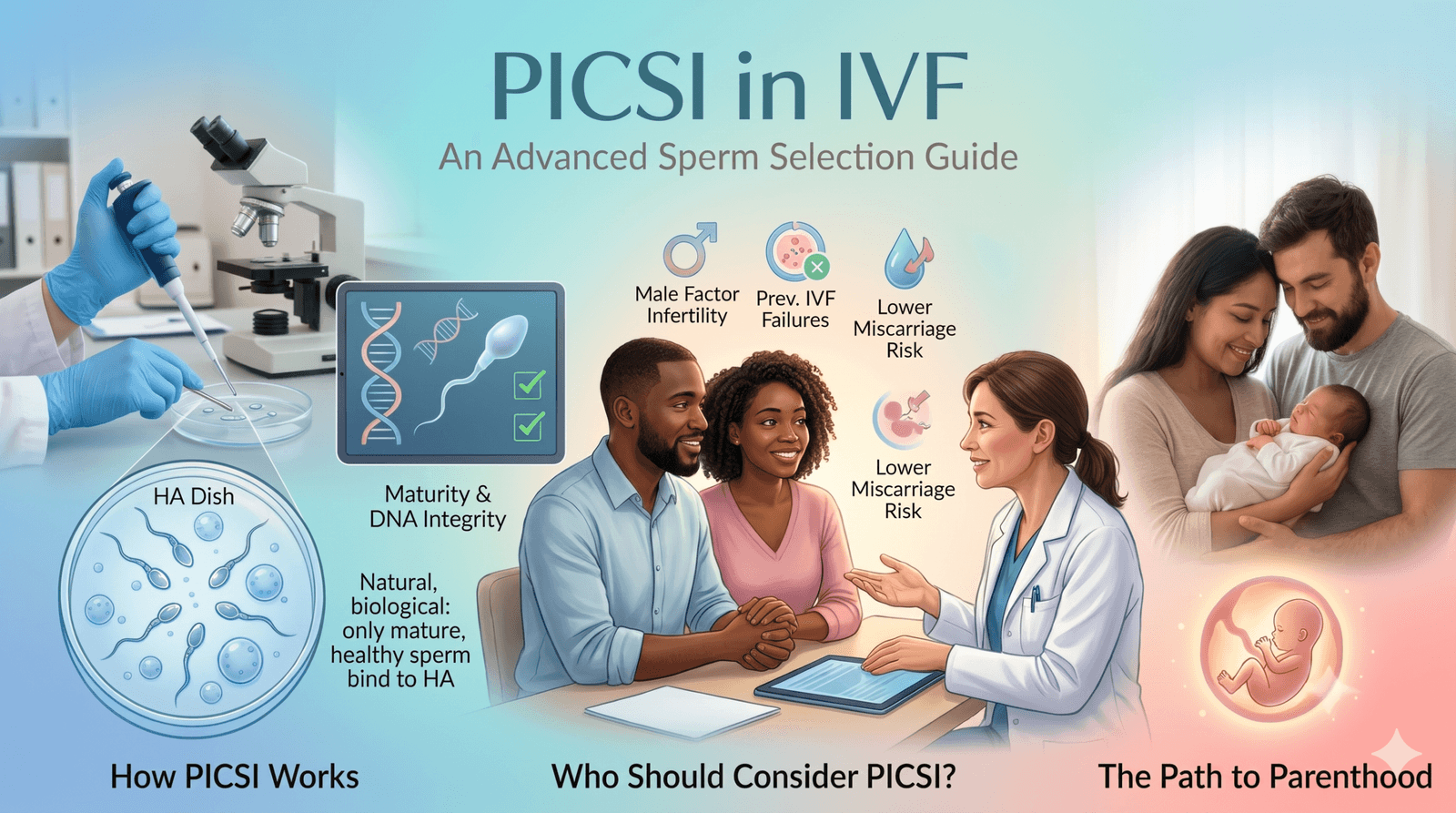
PICSI in IVF: A Complete Guide to Success Rates, Benefits, Research, Costs and What Every Couple Should Know
Introduction
When you’re going through infertility treatment, every decision can feel overwhelming. After months or even years of trying to conceive, many couples begin exploring advanced IVF techniques that may improve their chances of a healthy pregnancy.
One such technique is PICSI (Physiological Intracytoplasmic Sperm Injection), an advanced sperm selection method used alongside ICSI (Intracytoplasmic Sperm Injection). PICSI aims to help embryologists choose the most mature and genetically competent sperm before fertilisation takes place.
But does PICSI really improve IVF success rates? Who should consider it? What questions should you ask your fertility specialist?
In this comprehensive guide, we’ll explore the science behind PICSI, discuss recent research findings, explain its benefits and limitations, and help you decide whether it may be appropriate for your fertility journey.
What Is PICSI?
PICSI (Physiological Intracytoplasmic Sperm Injection) is an advanced sperm selection technique used during an IVF-ICSI cycle.
In standard ICSI, an embryologist selects sperm based primarily on how they look and move under a microscope. While appearance and motility are important, they do not always reveal the genetic quality of sperm.
PICSI takes sperm selection a step further.
The technique uses hyaluronic acid (HA), a naturally occurring substance found around human eggs. Mature and healthy sperm have receptors that allow them to bind to hyaluronic acid. During PICSI, sperm are placed in a specialised dish containing HA, and only those capable of binding are selected for fertilisation. This process attempts to mimic natural sperm selection that occurs during conception.
How Does PICSI Work?
The PICSI procedure is performed in the embryology laboratory alongside standard IVF treatment.
Step 1: Sperm Collection
A semen sample is collected and prepared in the laboratory.
Step 2: Hyaluronic Acid Binding
Prepared sperm are introduced to a special PICSI dish containing microscopic droplets of hyaluronic acid.
Step 3: Sperm Selection
The embryologist identifies sperm that bind successfully to the hyaluronic acid.
Research suggests that HA-bound sperm tend to show:
- Better maturity
- Higher DNA integrity
- Better morphology
- Lower chromosomal abnormalities
Step 4: Fertilisation
The selected sperm is then injected directly into the egg using the standard ICSI procedure.
The remainder of the IVF process continues as usual.
Why Is PICSI Used?
Not all sperm that appear healthy under a microscope are genetically healthy.
Some may contain:
- DNA fragmentation
- Chromosomal abnormalities
- Reduced maturity
- Cellular damage
PICSI helps embryologists identify sperm that are biologically more mature and potentially better suited for fertilisation.
Who Should Consider PICSI?
PICSI may be considered for couples facing specific fertility challenges.
Your fertility specialist may discuss PICSI if:
Male Factor Infertility
PICSI is commonly considered when sperm quality is reduced.
Examples include:
- Poor sperm morphology
- Low sperm count
- Reduced sperm motility
- Elevated DNA fragmentation
Previous IVF or ICSI Failure
Couples who have experienced unsuccessful IVF cycles may benefit from exploring advanced sperm selection methods.
Recurrent Miscarriages
Some specialists recommend PICSI when unexplained recurrent pregnancy losses may be linked to sperm DNA quality.
Advanced Maternal Age
Research has suggested that sperm selection may have particular value in women above 35 years of age undergoing IVF treatment.
How Can PICSI Help Improve IVF Outcomes?
1. Better Sperm Selection
The main advantage of PICSI is its ability to select sperm based on biological maturity rather than appearance alone.
2. Reduced DNA Damage Risk
HA-binding sperm are often associated with improved DNA integrity. Better DNA quality may contribute to healthier embryo development.
3. Potential Reduction in Miscarriage Risk
One of the most discussed benefits of PICSI is its potential role in reducing miscarriage rates.
The large UK-based HABSelect trial found that while live birth rates were not significantly improved overall, miscarriage rates were lower in the PICSI group compared with standard ICSI.
4. More Natural Selection Process
PICSI attempts to mimic nature by selecting sperm capable of binding to hyaluronic acid, similar to what occurs around a naturally fertilised egg.
What Does Recent Research Say About PICSI?
Research on PICSI continues to evolve.
The HABSelect Trial
One of the largest studies evaluating PICSI included over 2,700 couples undergoing ICSI treatment.
Researchers reported:
- No statistically significant increase in overall live birth rates
- Lower miscarriage rates among couples using PICSI compared with standard ICSI
Age-Focused Research
A later analysis suggested that benefits may be more noticeable in older couples, particularly women over 35 years of age. Researchers found improved live birth outcomes in certain age groups when hyaluronic acid-selected sperm were used.
Ongoing Investigations
New clinical studies continue to explore whether PICSI can improve:
- Embryo quality
- Euploid embryo development
- Pregnancy rates
- IVF success in specific patient populations
What Success Rate Can You Expect?
This is often the first question patients ask.
The honest answer is that PICSI is not a miracle treatment, nor does it guarantee pregnancy.
Current evidence suggests:
- PICSI may improve sperm selection quality.
- It may reduce miscarriage rates in selected patients.
- Some populations may benefit more than others.
- Overall live birth improvements remain under investigation. Your actual chances of success depend on several factors:
- Female age
- Egg quality
- Embryo quality
- Uterine health
- Sperm parameters
- Overall fertility diagnosis
PICSI should be viewed as a supportive laboratory technique rather than a standalone fertility treatment.
What Should You Expect During Treatment?
From a patient’s perspective, PICSI usually feels no different from a standard IVF-ICSI cycle.
You will still undergo:
- Fertility evaluation
- Ovarian stimulation
- Egg retrieval
- Semen collection
- Embryo development
- Embryo transfer
The PICSI procedure occurs entirely inside the embryology laboratory.
No additional surgery or recovery is generally required.
What Should You Know Before Meeting Your Fertility Doctor?
Preparing for your consultation can help you make informed decisions.
Before your appointment, gather information regarding:
- Previous IVF or ICSI cycles
- Semen analysis reports
- DNA fragmentation reports (if available)
- Fertility diagnosis
- History of miscarriages
- Previous embryo quality observations
Having these details readily available can make discussions more productive and personalised.
Questions to Ask Your Fertility Specialist About PICSI
Consider discussing the following questions:
- Am I a suitable candidate for PICSI?
- What specific fertility issues make PICSI beneficial in my case?
- Have you seen improved outcomes with PICSI in patients like me?
- Should I undergo sperm DNA fragmentation testing?
- Will PICSI improve embryo quality?
- How much additional cost is involved?
- Are there alternative sperm selection methods available?
- What does current research suggest for my age group?
- Could PICSI help reduce my miscarriage risk?
- What are the realistic success expectations in my situation?
Advantages of PICSI
Potential Benefits
More advanced sperm selection
Uses biological maturity markers
May select sperm with higher DNA integrity
Can be beneficial in male factor infertility
May reduce miscarriage risk in selected patients
Laboratory procedure requiring no additional patient intervention
Mimics aspects of natural sperm selection
Limitations of PICSI
What Patients Should Know
Does not guarantee pregnancy
Additional costs may apply
Research findings remain mixed
Not necessary for every IVF patient
May not significantly increase live birth rates in all populations
Benefits vary between clinics and patient groups
Frequently Asked Questions (FAQs)
Is PICSI the same as ICSI?
No. PICSI is an advanced sperm selection technique performed before ICSI. Once sperm are selected through PICSI, fertilisation still occurs using the standard ICSI procedure.
Does PICSI improve IVF success rates?
Research shows mixed results. Some studies report lower miscarriage rates and potential benefits in specific patient groups, while overall live birth improvements remain under investigation.
Is PICSI recommended for everyone undergoing IVF?
No. PICSI is usually considered for specific fertility situations, particularly male factor infertility or previous treatment failures.
Is PICSI painful?
No. The procedure is performed in the laboratory and does not require additional intervention for the patient.
Can PICSI improve embryo quality?
PICSI aims to select biologically mature sperm with better DNA integrity, which may positively influence embryo development, although outcomes vary.
Can PICSI reduce miscarriage rates?
Some research has suggested lower miscarriage rates among couples who used PICSI compared with standard ICSI.
Is PICSI useful for recurrent IVF failure?
It may be considered in certain patients with repeated IVF or ICSI failures, especially when sperm quality concerns are suspected.
Does PICSI guarantee a healthy baby?
No fertility treatment can guarantee pregnancy or a healthy baby. PICSI is designed to improve sperm selection, but many factors influence treatment outcomes.
Conclusion
For couples navigating infertility, every additional option can offer renewed hope. PICSI represents an innovative approach to sperm selection that aims to identify mature, high-quality sperm using a process that closely resembles natural fertilisation.
Although current evidence does not conclusively show a significant improvement in overall live birth rates for all patients, research suggests that PICSI may reduce miscarriage risk and provide benefits for selected individuals, particularly those facing male factor infertility, recurrent IVF failure, or specific sperm quality concerns. The most important step is understanding whether PICSI is appropriate for your unique fertility situation. An informed discussion with your fertility team can help determine if this advanced IVF add-on aligns with your treatment goals and gives you the confidence to move forward on your path towards parenthood.
Ready to Take the Next Step in Your Fertility Journey?
A diagnosis of male infertility can raise many questions, but it is important to remember that today’s reproductive medicine offers more options and hope than ever before. Whether you have been advised to consider ICSI due to low sperm count, poor sperm motility, abnormal sperm morphology, previous IVF fertilisation failure, or unexplained infertility, understanding your options is the first step towards making informed decisions.
As an IVF Counsellor, I believe that every fertility journey deserves personalised guidance, emotional support, and clear, evidence-based information. No two couples are the same, and the right treatment approach should be tailored to your unique medical history, fertility goals, and circumstances.
If you are exploring ICSI treatment, fertility preservation, or advanced assisted reproductive techniques, I am here to help you better understand your diagnosis, prepare for consultations, and navigate the emotional aspects of treatment with confidence and clarity.
Book a consultation today and take the next step towards parenthood with expert guidance, compassionate support, and a treatment plan designed around your individual journey.