Home / Blogs / PRP in Fertility Treatment: Can Platelet...
← All Blogs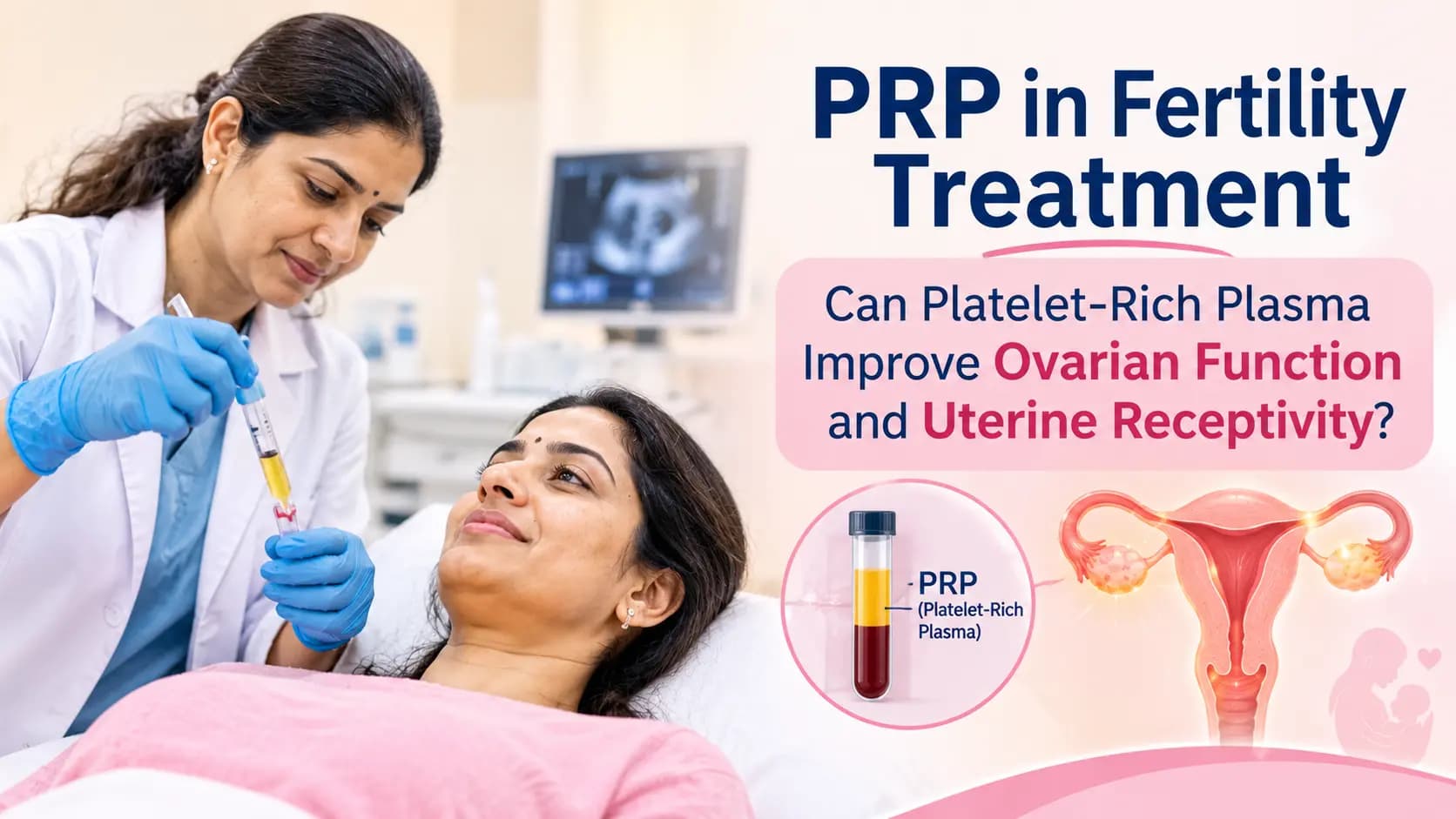
PRP in Fertility Treatment: Can Platelet-Rich Plasma Improve Ovarian Function and Uterine Receptivity?
What if your body’s own healing mechanisms could help support your fertility journey?
Advances in reproductive medicine continue to transform the way infertility is diagnosed and treated. Among the most exciting developments in recent years is Platelet-Rich Plasma (PRP) therapy, a regenerative treatment that has gained significant attention for its potential role in enhancing fertility outcomes. From improving endometrial thickness in women with a thin uterine lining to supporting ovarian function in selected patients with diminished ovarian reserve, PRP is opening new possibilities in fertility care.
Although PRP is not a miracle cure and may not be appropriate for every patient, emerging research suggests that it may help improve the reproductive environment in certain cases, particularly when conventional treatment approaches have delivered limited results. As a result, PRP is increasingly being explored alongside IVF and other assisted reproductive technologies as a promising adjunct treatment.
What Is PRP?
Platelet-Rich Plasma (PRP) is a concentrated solution derived from a patient’s own blood. It contains a high concentration of platelets along with various growth factors, cytokines, and bioactive proteins that play an essential role in tissue repair, cell regeneration, and healing.
The PRP preparation process involves:
- Drawing a small sample of blood from the patient.
- Processing the blood in a centrifuge to separate its components.
- Concentrating the platelet-rich portion.
- Injecting the PRP into the targeted area.
Since PRP is created from the patient’s own blood, the risk of allergic reactions or rejection is extremely low.
How Does PRP Work in Reproductive Medicine?
Platelets contain powerful growth factors that help stimulate tissue regeneration and improve blood supply. In fertility treatment, PRP is believed to promote cellular repair and rejuvenation within reproductive tissues.
Potential benefits include:
- Enhanced tissue regeneration
- Improved blood flow
- Increased cellular activity
- Reduced inflammation
- Better tissue responsiveness
- Improved healing processes
These effects make PRP an attractive option for addressing certain fertility challenges related to the uterus and ovaries.
PRP for the Uterus: Improving Endometrial Receptivity
One of the most common fertility applications of PRP is intrauterine PRP therapy.
For an embryo to successfully implant, the uterine lining (endometrium) must reach an adequate thickness and possess optimal receptivity. However, some women continue to experience recurrent implantation failure or persistently thin endometrium despite undergoing standard fertility treatments.
What Is a Thin Endometrium?
The endometrium is the inner lining of the uterus where an embryo implants and develops.
A thin endometrial lining may:
- Reduce implantation rates
- Affect embryo development
- Lower pregnancy success rates
- Increase IVF cycle cancellations
Many fertility specialists consider an endometrial thickness below 7 mm suboptimal for embryo transfer.
How PRP May Help the Uterus
PRP is administered directly into the uterine cavity using a thin catheter. Growth factors released by platelets may stimulate endometrial regeneration and improve blood supply to the uterine lining.
Potential benefits include:
- Increased endometrial thickness
- Improved uterine blood flow
- Enhanced endometrial receptivity
- Better implantation potential
- Improved embryo transfer outcomes
PRP is sometimes recommended for women with:
- Thin endometrium
- Recurrent implantation failure
- Repeated unsuccessful IVF cycles
- Poor endometrial response to conventional therapies
PRP for the Ovaries: A Potential Option for Ovarian Rejuvenation
Another emerging application of PRP involves ovarian PRP, often referred to as ovarian rejuvenation therapy.
This approach is being explored in women who have:
- Diminished ovarian reserve (DOR)
- Premature ovarian insufficiency (POI)
- Poor ovarian response during IVF
- Age-related decline in egg quantity and quality
Understanding Diminished Ovarian Reserve
Ovarian reserve refers to the quantity and quality of eggs remaining in the ovaries.
Women with diminished ovarian reserve often experience:
- Lower Anti-Müllerian Hormone (AMH) levels
- Higher Follicle Stimulating Hormone (FSH) levels
- Fewer follicles during ovarian stimulation
- Lower egg retrieval numbers during IVF
These factors can significantly impact fertility treatment success.
How Ovarian PRP Is Performed
The PRP is injected directly into the ovaries under ultrasound guidance, usually through a minimally invasive procedure similar to egg retrieval.
Researchers believe growth factors within PRP may help stimulate dormant ovarian tissue and improve the ovarian microenvironment.
Potential benefits being investigated include:
- Increased follicular activity
- Improvement in AMH levels in some patients
- Better ovarian response to stimulation
- Increased egg retrieval numbers
- Potential improvement in egg quality
While early findings are encouraging, ovarian rejuvenation remains an evolving area of reproductive medicine.
Can PRP Improve IVF Success Rates?
One of the most common questions fertility specialists receive is whether PRP can improve IVF outcomes.
The answer depends on the specific fertility challenge being addressed.
In selected patients, PRP may help improve:
- Endometrial thickness before embryo transfer
- Implantation potential
- Ovarian response during stimulation
- Clinical pregnancy rates
- IVF cycle outcomes
However, PRP should be viewed as a complementary treatment rather than a standalone solution. IVF success continues to depend on multiple factors, including:
- Female age
- Egg quality
- Embryo quality
- Sperm quality
- Uterine health
- Underlying medical conditions
What Do Current Studies Say About PRP Success Rates?
Interest in PRP has grown rapidly due to encouraging results reported by fertility centres worldwide. Some studies have demonstrated improvements in endometrial thickness, implantation rates, and pregnancy outcomes in women with thin endometrial lining or recurrent implantation failure.
Similarly, preliminary studies investigating ovarian PRP have reported:
- Improved ovarian function in selected patients
- Increased follicular development
- Enhanced response to ovarian stimulation
- Occasional spontaneous pregnancies
However, it is important to understand that success rates vary considerably among individuals.
Currently:
- PRP is considered an emerging fertility treatment.
- More large-scale clinical trials are needed.
- Outcomes differ based on age and diagnosis.
- Results cannot be guaranteed.
Patients should have realistic expectations and discuss individual prognosis with a fertility specialist.
Who May Be a Candidate for Fertility PRP?
PRP may be considered for women experiencing:
Uterine Factors
- Thin endometrium
- Recurrent implantation failure
- Poor endometrial growth
- Repeated unsuccessful embryo transfers
Ovarian Factors
- Diminished ovarian reserve
- Poor ovarian response
- Premature ovarian insufficiency
- Low AMH levels
- Advanced maternal age
A comprehensive fertility evaluation is essential before determining if PRP is an appropriate option.
Is PRP Safe?
Because PRP is derived from the patient’s own blood, it is generally considered a safe procedure when performed by experienced fertility specialists.
Advantages include:
- Minimally invasive treatment
- Low risk of allergic reactions
- Outpatient procedure
- Minimal recovery time
- Use of natural biological material
As with any medical procedure, potential risks may include:
- Mild discomfort
- Temporary cramping
- Bleeding
- Infection (rare)
- Procedure-related complications
Frequently Asked Questions (FAQs)
What does PRP stand for?
PRP stands for Platelet-Rich Plasma, a concentrated preparation of platelets obtained from a patient’s own blood.
Can PRP help women with low AMH?
PRP may potentially benefit certain women with low AMH by improving ovarian responsiveness. However, results vary and further research is ongoing.
Does PRP guarantee pregnancy?
No. PRP may improve certain fertility parameters, but it cannot guarantee conception or a successful pregnancy.
How long does PRP treatment take?
The procedure is usually completed within a few hours, including blood collection, processing, and administration.
Is PRP painful?
Most patients experience only mild discomfort during the procedure. Sedation may be used during ovarian PRP treatment.
Can PRP be combined with IVF?
Yes. PRP is commonly used as an adjunct to IVF treatment, particularly in women with thin endometrium, recurrent implantation failure, or poor ovarian response.
How many PRP sessions are needed?
The number of treatments varies depending on the patient’s diagnosis, fertility goals, and specialist recommendations.
Is ovarian PRP approved as a standard fertility treatment?
Ovarian PRP remains an emerging treatment. While many clinics offer it, ongoing research continues to evaluate its long-term effectiveness and ideal patient profile.
Who is not a good candidate for PRP?
Patients with certain blood disorders, active infections, severe medical conditions, or contraindications identified during evaluation may not be suitable candidates.
A New Frontier in Fertility Care
The field of reproductive medicine continues to evolve, offering new hope to individuals and couples facing fertility challenges. PRP therapy represents one of the most exciting developments in regenerative fertility treatment, with growing evidence supporting its role in improving uterine receptivity and potentially enhancing ovarian function in selected patients.
While PRP is not a universal solution and further research is needed to fully establish its long-term benefits, it offers promising possibilities for patients who have struggled with thin endometrium, recurrent implantation failure, diminished ovarian reserve, or poor IVF outcomes.
For many individuals, PRP may become an important part of a personalised fertility strategy, helping create a more supportive environment for conception and pregnancy.
Ready to Explore Whether PRP Could Benefit Your Fertility Journey?
Every fertility journey is unique. If you have experienced repeated IVF failures, thin endometrial lining, low ovarian reserve, or challenges achieving pregnancy, a detailed fertility assessment can help determine whether PRP therapy may be appropriate for you.Schedule a consultation with our fertility specialists today to learn more about PRP treatment, explore your options, and take the next step towards achieving your dream of parenthood.