Home / Blogs / Recurrent Implantation Failure (RIF): A ...
← All Blogs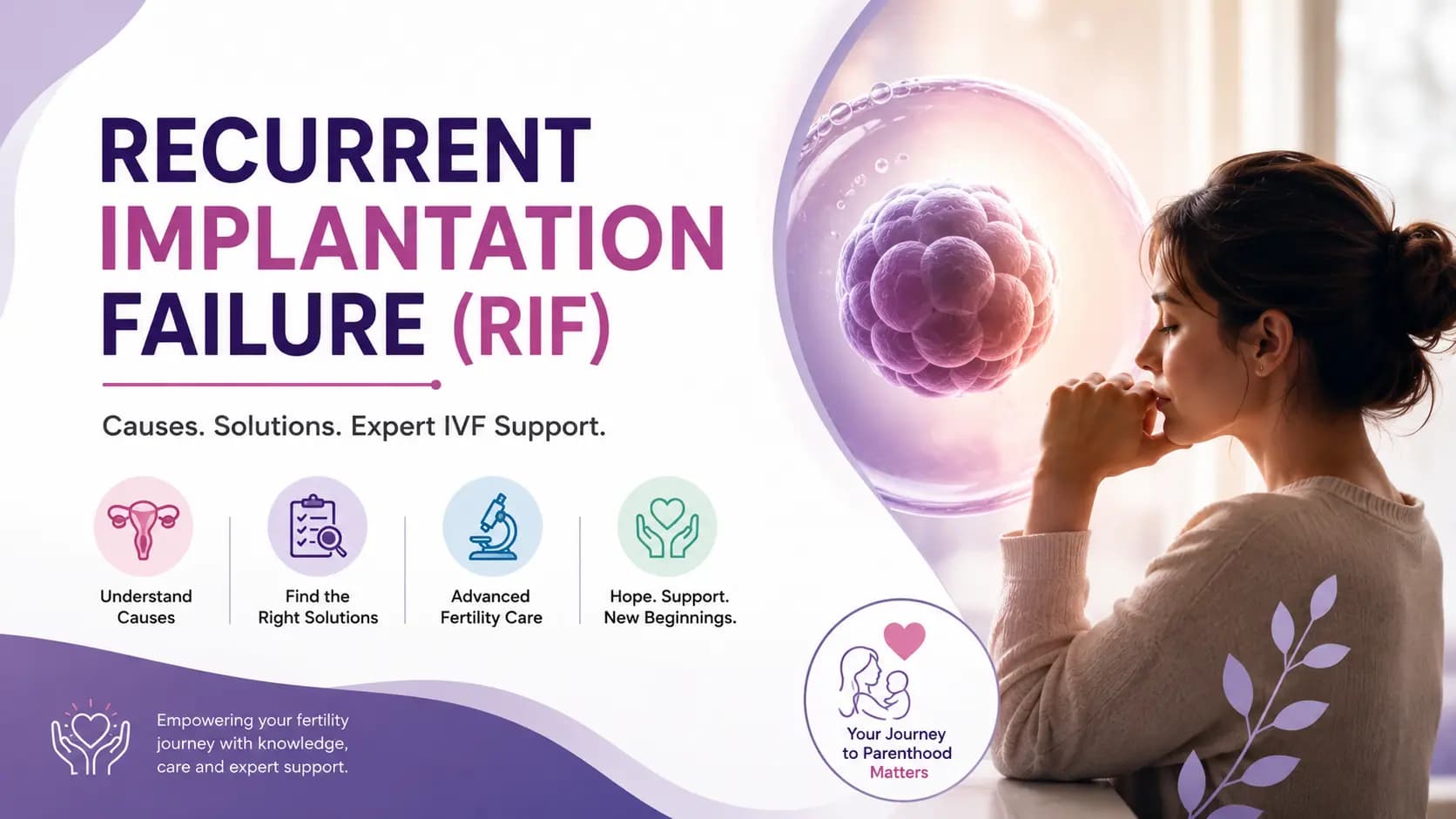
Recurrent Implantation Failure (RIF): A Complete Guide to Causes, Solutions, and Expert IVF Support
Recurrent implantation failure (RIF) is one of the most commonly searched fertility concerns today, especially among couples undergoing IVF treatment. RIF refers to the repeated failure of good‑quality embryos to implant in the uterus after multiple IVF or ICSI cycles. Clinically, it is often defined when two or three high‑grade blastocysts fail to result in a pregnancy. For patients, however, RIF feels like a cycle of hope followed by heartbreak — repeated embryo transfers, rising expectations, and the emotional pain of a negative pregnancy test. Understanding what RIF is, why IVF fails, and how to improve implantation success is essential for anyone trying to conceive through assisted reproductive technology.
What Causes Recurrent Implantation Failure?
RIF is rarely caused by a single issue. It usually results from multiple overlapping factors affecting embryo quality, uterine receptivity, or overall reproductive health.
• Embryo quality — One of the most searched IVF topics. Chromosomal abnormalities, poor egg quality, sperm DNA fragmentation, and genetic issues can reduce implantation potential. Even the best IVF labs cannot guarantee that every embryo is genetically normal.
• Uterine factors — Fibroids, polyps, adenomyosis, adhesions, chronic endometritis, and thin endometrium are major causes of failed embryo transfer. These conditions directly affect endometrial receptivity.
• Immunological issues — Immune‑related implantation failure is a trending fertility topic. Abnormal immune activation may prevent the embryo from attaching, though research is still evolving.
• Hormonal imbalance — Thyroid disorders, progesterone deficiency, and luteal phase issues can reduce IVF success rates.
• Lifestyle and systemic health — Smoking, obesity, stress, poor sleep, and uncontrolled PCOS or diabetes can negatively impact implantation.
Understanding these causes helps patients make informed decisions and choose the right fertility specialist for advanced RIF evaluation.
How to Deal With Recurrent Implantation Failure
Experiencing RIF can be overwhelming, but there are clear, evidence‑based steps to improve IVF success and increase the chances of a healthy pregnancy.
• Comprehensive RIF evaluation — A full fertility workup including hysteroscopy, ERA/EMMA/ALICE tests, thrombophilia screening, sperm DNA fragmentation, and hormonal profiling is essential.
• Optimising embryo selection — Techniques like blastocyst culture, time‑lapse monitoring, and PGT‑A genetic testing significantly improve implantation rates.
• Improving uterine receptivity — Treating infections, correcting structural issues, improving blood flow, and optimising progesterone timing can transform IVF outcomes.
• Holistic fertility support — Nutrition, supplements, stress reduction, acupuncture, yoga, and sleep optimisation are increasingly searched strategies for boosting implantation success.
RIF does not mean IVF will never work — it means the approach needs refinement, deeper investigation, and personalised fertility care.
Choosing the Right Doctor for Recurrent Implantation Failure
Selecting the right fertility specialist is crucial for improving IVF success rates after repeated failed embryo transfers.
• Experience with RIF cases — Choose a doctor who regularly handles complex implantation failure cases.
• Personalised treatment plans — IVF protocols must be customised based on your medical history, embryo quality, and uterine environment.
• Advanced fertility diagnostics — Ensure the clinic offers hysteroscopy, ERA testing, PGT‑A, immune profiling, and sperm DNA fragmentation analysis.
• Clear communication — You should feel supported, informed, and confident at every step.
• Multidisciplinary fertility care — The best IVF centres combine reproductive endocrinology, embryology, nutrition, counselling, and lifestyle support.
Choosing the right doctor is not just about success rates — it is about finding someone who understands your journey and offers advanced solutions for RIF.
How I Can Help as an IVF Consultant
As an IVF consultant, I help patients navigate the complexities of fertility treatment with clarity, confidence, and expert guidance. My role includes:
• Understanding IVF reports and simplifying medical terminology
• Identifying gaps in previous fertility evaluations
• Preparing for doctor consultations with the right questions
• Emotional and psychological support during IVF cycles
• Decision‑making guidance for tests, protocols, and embryo transfer strategies
• Organising your IVF journey for smoother treatment planning
My goal is to empower you with knowledge, reduce confusion, and help you make informed choices that improve your chances of IVF success.
A Call for Fertility Awareness and Empowered IVF Decisions
Recurrent implantation failure is not a final verdict — it is a sign that deeper evaluation and personalised fertility care are needed. By spreading awareness, encouraging advanced diagnostics, and guiding patients with expert IVF support, we can transform fear into informed action. The more openly we discuss RIF, the more individuals can access timely help, evidence‑based solutions, and renewed hope on their journey to parenthood.